Water damage in your home can lead to the growth of mold and mildew, two types of fungi that thrive in damp environments. While they share some similarities, mold and mildew have distinct characteristics and require different approaches for removal and prevention. Understanding the differences between the two can help you take the right steps to protect your home and your health.
What’s the Difference Between Mold and Mildew in Water-Damaged Homes?
Mold and mildew are common problems in water-damaged homes, but they differ in appearance, behavior, and impact. This guide explains the following:
- How mold and mildew differ
- Signs of mold and mildew in your home
- The health risks of exposure
- Effective removal and prevention methods
- When to call Exact Recon for professional mold remediation
Here’s a closer look at each.
How Mold and Mildew Differ
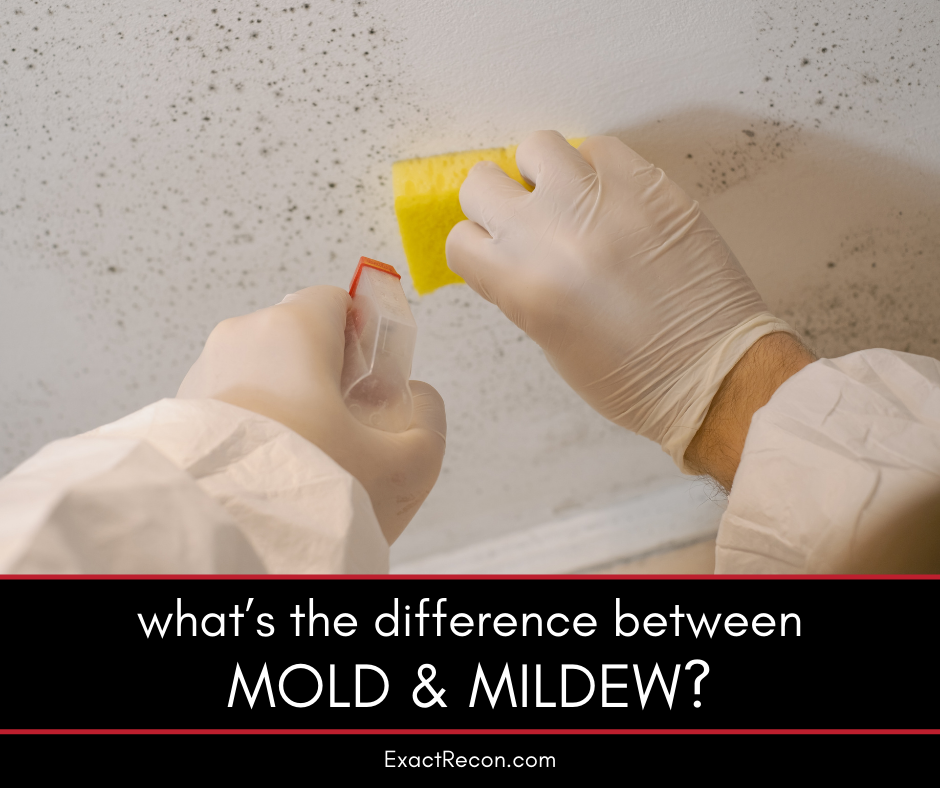
Mold and mildew are both fungi, but they differ in their appearance and where they grow. Mildew typically appears as a powdery, white or gray substance that stays on the surface of moist areas. It is often found on windowsills, shower tiles, or fabrics.
Mold, on the other hand, is usually darker and can appear black, green, or brown. It often grows deeper into materials like wood, drywall, or carpet, making it harder to remove. Mold thrives in more substantial water damage scenarios, particularly in areas with prolonged moisture exposure, such as basements or behind walls.
Signs of Mold and Mildew in Your Home
The first step in addressing mold or mildew is identifying their presence. Mildew often emits a mild, musty odor and is visible on damp surfaces. Mold has a stronger odor and is typically accompanied by discoloration or staining of walls, ceilings, or floors. It can also cause materials to deteriorate, leading to structural issues over time.
If you notice persistent musty smells or visible patches of mold or mildew after experiencing water damage, it’s essential to take immediate action.
The Health Risks of Exposure
Exposure to mold and mildew can lead to a range of health problems, especially for people with allergies, asthma, or weakened immune systems. Mildew exposure is generally less severe, causing mild irritation to the eyes, nose, or throat.
Mold exposure, however, can be more serious. Mold releases spores that can trigger respiratory issues, allergic reactions, and even infections in some cases. Black mold, in particular, is known to produce mycotoxins that can pose significant health risks.
Effective Removal and Prevention Methods
Removing and preventing mold and mildew require different approaches. For mildew, cleaning with a mixture of water and white vinegar or using a household mildew cleaner is often sufficient. Regular maintenance and ventilation can help prevent mildew from returning.
Mold removal, on the other hand, is more complex. For small patches, you can clean mold using a mixture of detergent and water. However, extensive mold growth requires professional mold remediation to ensure it is completely removed and doesn’t return. Mold often grows behind walls or under flooring, so it’s important to address the root cause, such as leaks or persistent moisture.
To prevent both mold and mildew, keep your home dry and well-ventilated. Fix leaks promptly, use dehumidifiers in humid areas, and ensure proper drainage around your home.
When to Call Exact Recon for Professional Mold Remediation
If mold or mildew persists despite your efforts, or if the growth is extensive, it’s time to call in the experts. At Exact Recon, we specialize in mold remediation and addressing the underlying causes of fungal growth. Our team uses advanced techniques to remove mold, clean affected areas, and restore your home’s safety.
We also provide guidance on preventing future growth, ensuring your property remains protected after water damage.
FAQ About Mold and Mildew in Water-Damaged Homes
Check out these commonly asked questions about mold and mildew. If you don’t see your question here, please call our office and we’ll find you the answers you need.
How Can I Tell If I Have Mold or Mildew?
Mildew is typically white or gray and stays on the surface, while mold is darker and often penetrates materials like walls or wood. Both may emit musty odors.
Can Mildew Turn Into Mold?
No, mildew and mold are different types of fungi. However, the same damp conditions that cause mildew can also support mold growth if not addressed.
Is Mold More Dangerous Than Mildew?
Yes, mold generally poses greater health risks than mildew, especially for people with respiratory conditions or weakened immune systems.
Can I Remove Mold or Mildew Myself?
You can remove small patches of mildew with household cleaners, but mold often requires professional remediation to ensure it is fully eliminated.
How Do I Prevent Mold and Mildew After Water Damage?
Keep your home dry by addressing leaks, using dehumidifiers, and ensuring proper ventilation. Regularly inspect areas prone to moisture for early signs of growth.
Mold and mildew can cause serious problems if left unchecked. Understanding the differences between them and taking appropriate action can protect your home and health. Trust Exact Recon for professional remediation and guidance.
Do You Need a Disaster Remediation Expert in Washtenaw County or Jackson County?
If your home has already been damaged, we can help. Check out our services and get a free disaster remediation quote today. We offer:
- Water damage restoration
- Fire damage restoration
- Mold removal and remediation
- Fire and smoke restoration
- Sewer cleanup and disinfecting
- Reconstruction
- Wind and storm damage repair