Mold doesn’t just look bad—it grows quickly and can damage your home’s structure and belongings. It can also affect your health if you don’t address it right away. Knowing how mold spreads and what to do about it gives you a better chance of stopping it early.
Mold Spread, Explained (and How to Stop It Early)
Mold remediation is one of the most common services people need after a flood, pipe break, or other water event. Mold spores exist everywhere, but when they find moisture, they grow fast. This guide explains the following:
-
How mold starts and spreads
-
Common signs of mold in your home
-
Health risks linked to mold exposure
-
Steps to stop mold growth early
-
When to call professional help
Here’s a closer look at each.
How Mold Starts and Spreads
Mold begins when spores land on a damp surface. Within 24 to 48 hours, those spores can start growing. They thrive in areas with high humidity, standing water, or damp materials like drywall, carpet, and wood.
Once mold starts, it releases more spores into the air. Those spores travel to other parts of your home, where they can start new colonies. That’s why even a small leak can lead to widespread water damage if it’s not addressed quickly.
Common Signs of Mold in Your Home
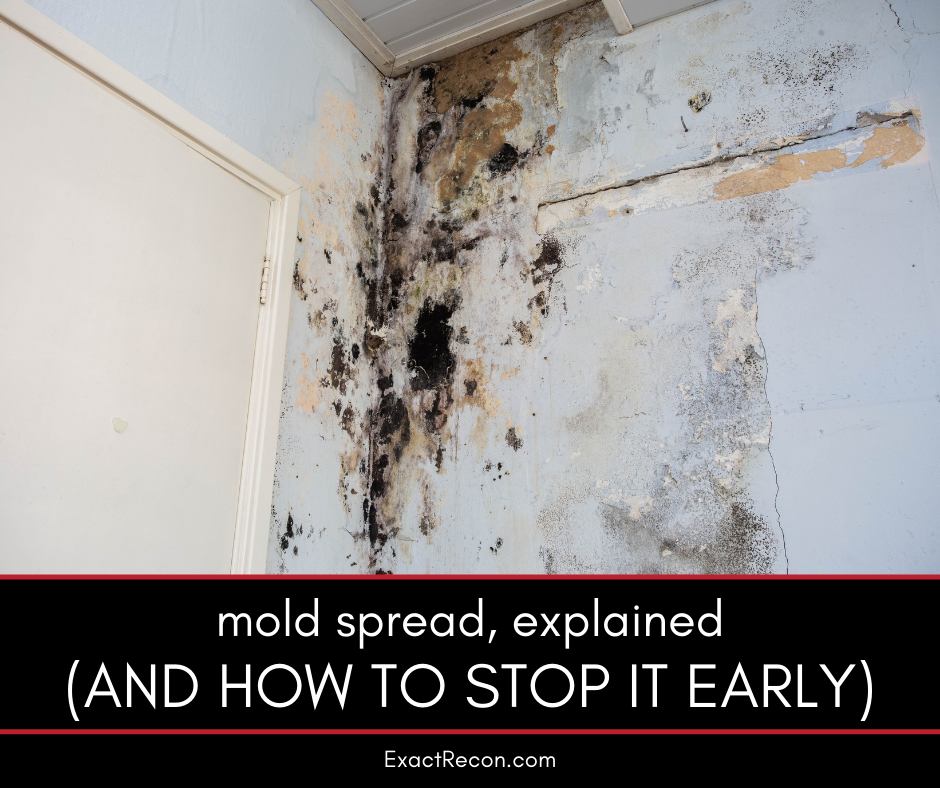
You might notice a musty smell before you see visible mold. Look for discolored spots on walls, ceilings, and floors. Mold can also hide inside walls, under flooring, or in crawl spaces.
If your home recently had storm damage or a broken pipe, be extra cautious. Even if the surface looks dry, hidden areas may still hold moisture that encourages mold growth.
Health Risks Linked to Mold Exposure
The Centers for Disease Control and Prevention explain that mold exposure can cause coughing, wheezing, and throat irritation. It can also worsen asthma and allergies. You can read more about mold and health directly on the CDC’s site.
Children, older adults, and people with compromised immune systems are at higher risk of serious effects. That’s why it’s important to stop mold quickly and avoid handling heavy growth without protection.
Steps to Stop Mold Growth Early
Act fast if you notice signs of moisture. Dry the area thoroughly using fans and dehumidifiers. Remove and discard materials that can’t be dried quickly, such as soaked carpet padding.
Clean small spots of surface mold with soap and water or a cleaner made for mold. Always wear gloves and a mask while doing this. If you see mold covering more than 10 square feet, it’s time to call a professional.
Addressing moisture at the source is the key to prevention. Fix leaks, improve ventilation, and monitor indoor humidity levels to reduce future mold risks.
When to Call Professional Help
Mold spreads quickly and often hides where you can’t see it. Professionals use specialized equipment to find hidden colonies, dry your home thoroughly, and remove contaminated materials.
Restoration companies can also handle related issues like fire damage, smoke damage, reconstruction, and full disaster cleanup. Calling early gives you the best chance to protect both your health and your home.
FAQ About Mold Spread
Check out these commonly asked questions about mold spread. If you don’t see your question here, please call our office and we’ll find you the answers you need.
How Fast Does Mold Spread in a Home?
Mold can begin growing within 24 to 48 hours of water exposure and can spread to new areas in just a few days if moisture remains.
Can I Stop Mold by Using a Fan?
Fans can help dry a space, but if mold has already started, fans may spread spores. Use them only with proper ventilation and cleanup methods.
Is Mold Always Visible?
No. Mold often grows behind walls, under floors, and inside air ducts where you can’t see it. A musty odor may be your first sign.
Can Bleach Kill Mold Permanently?
Bleach may clean surface mold, but it doesn’t reach deep into porous materials like wood or drywall. Mold can return if the moisture problem isn’t fixed.
When Should I Call a Professional for Mold?
Call a professional if mold covers more than 10 square feet, if it keeps returning, or if you suspect hidden growth after water damage.
Mold spreads quickly and poses risks to both your home and your health. By acting fast, drying out moisture, and knowing when to call professionals, you can stop mold early and reduce long-term damage.
Do You Need a Disaster Remediation Expert in Washtenaw County or Jackson County?
If your home has already been damaged, we can help. Check out our services and get a free disaster remediation quote today. We offer: