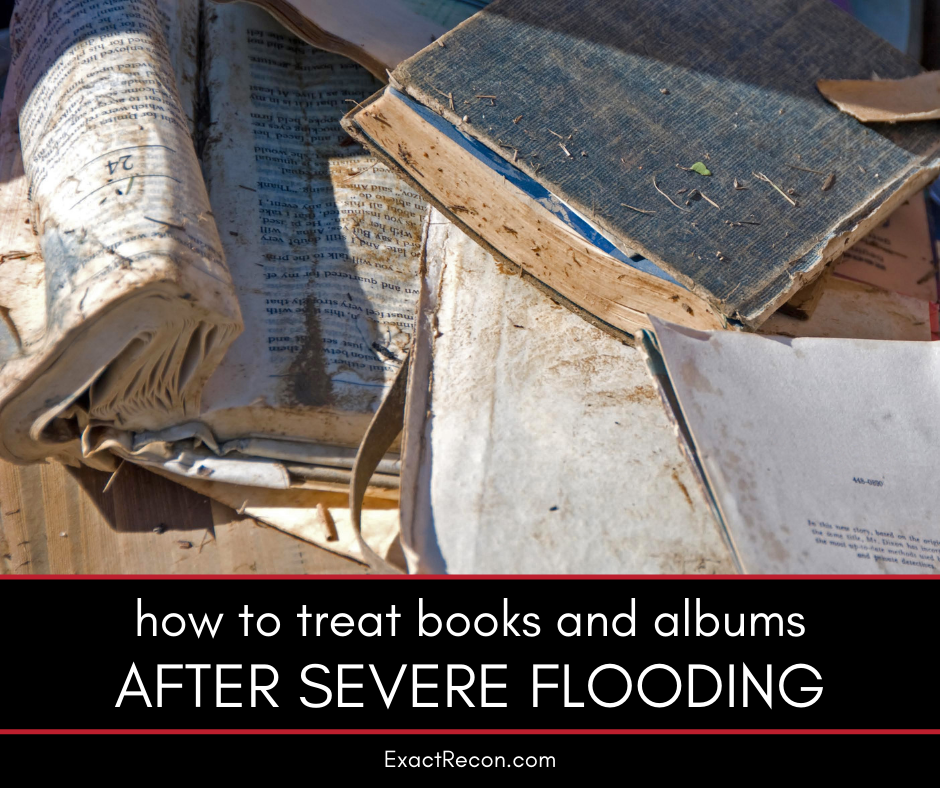
Floodwater can cause serious damage to books and albums. Pages soak up water quickly, bindings weaken, and mold can appear within days. Some items can be saved with patience and the right steps, while others may need professional care.
How to Treat Books and Albums after a Flood
Water damage from broken pipes, storms, or overflowing sewers often affects books and albums stored on low shelves or in basements. Because they’re porous and delicate, drying them requires special care. This guide explains the following:
-
Preparing books and albums for drying
-
Air drying methods for wet books
-
Freezing books and albums for later restoration
-
Preventing mold growth during drying
-
When to call professional restoration
Here’s a closer look at each.
Preparing Books and Albums for Drying
Before handling anything, make sure your home is safe to enter. Wear gloves to protect both yourself and fragile pages. Remove books and albums from wet boxes or shelves right away.
Keep items flat or upright in small groups. Don’t stack wet books, since weight can cause warping and pages to stick together. Handle them gently, as soaked bindings and paper tear easily.
Air Drying Methods for Wet Books
If a book or album is only damp, stand it upright on absorbent paper with pages slightly fanned open. Place fans nearby to circulate air, but don’t aim direct airflow onto fragile pages. Change absorbent paper often as it collects moisture.
For albums with photos, lay pages flat on clean towels or unprinted newsprint. If photos are stuck together, don’t pull them apart. This can cause permanent damage.
Freezing Books and Albums for Later Restoration
If you can’t dry books or albums right away, freeze them. Place them in freezer-safe bags and store them flat. Freezing halts mold growth and prevents further sticking until professionals can use controlled methods to separate and dry the pages.
This is especially useful after widespread storm damage when you may not have time to dry everything at once.
Preventing Mold Growth during Drying
Mold can start forming in as little as 24 to 48 hours. Keep fans and dehumidifiers running in the room until everything is completely dry. Watch for musty odors, discoloration, or fuzzy spots on pages, which signal mold growth.
If you notice mold, stop handling the books and call for mold remediation. Once it spreads, mold can permanently stain paper and cause health risks.
When to Call Professional Restoration
If books or albums are heavily soaked, stuck together, or showing signs of mold, call a restoration team. Professionals can use freeze drying, vacuum freeze techniques, and gentle cleaning methods to recover items that may otherwise be lost.
Restoration experts can also handle larger problems caused by the flood, including fire damage, smoke damage, reconstruction, and complete disaster cleanup.
FAQ About Treating Books and Albums after a Flood
Check out these commonly asked questions about treating books and albums after a flood. If you don’t see your question here, please call our office and we’ll find you the answers you need.
How Fast Should I Start Drying Books after a Flood?
Begin within 24 hours. The sooner you act, the better chance you have of preventing mold and saving the pages.
Can I Use a Hair Dryer to Dry My Books?
No. Heat can warp pages, damage bindings, and even make stains worse. Use air drying or freezing instead.
What If My Books Smell Musty after Drying?
Musty odors mean hidden moisture or mold. Use fans and dehumidifiers to dry further, and call professionals if the smell doesn’t go away.
Can Wet Photo Albums Be Saved?
Yes. If photos are loose, air dry them face up. If pages are stuck together, freeze the album and let professionals separate and restore it.
Should I Throw Away All Flooded Books?
Not always. Clean water exposure may leave books salvageable. If they were soaked in dirty or sewage water, replacement is usually the safer option.
Books and albums often hold sentimental value, making it worth the effort to save them after a flood. With quick action, safe drying methods, and professional help when needed, you can preserve your memories and reduce long-term damage.
Do You Need a Disaster Remediation Expert in Washtenaw County or Jackson County?
If your home has already been damaged, we can help. Check out our services and get a free disaster remediation quote today. We offer: