When disasters strike, cleanup and repairs can take days or even weeks. Having an emergency food kit ready ensures you and your family are safe, fed, and comfortable while you wait for disaster cleanup or reconstruction crews to restore your home.
How to Pack a Restoration Ready Emergency Food Kit
Emergencies such as water damage, fire damage, or storm damage can leave you without power, refrigeration, or safe cooking spaces. A well-stocked food kit gives you peace of mind and keeps your household prepared. This guide explains the following:
-
Choosing foods that store safely
-
Storing enough water and drinks
-
Packing tools and supplies
-
Rotating and maintaining your kit
-
When to use your food kit
Here’s a closer look at each.
Choosing Foods That Store Safely
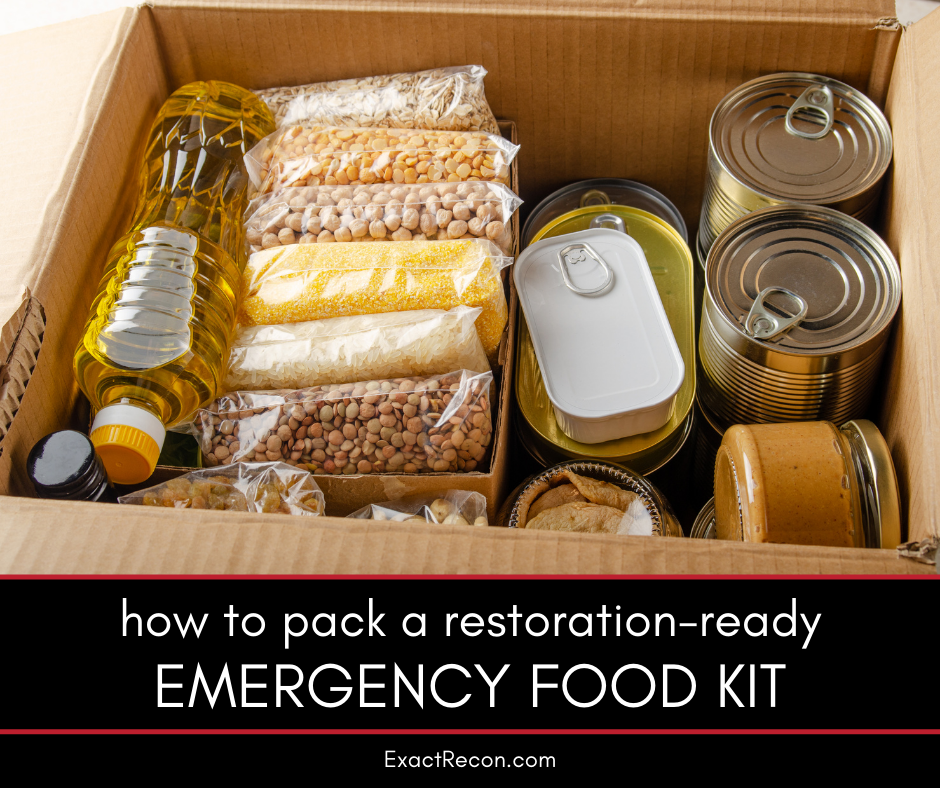
Pick nonperishable foods that last at least six months to a year. Good options include canned meats, beans, vegetables, nut butters, granola bars, and dried fruit. Choose ready-to-eat meals that don’t need cooking.
The Federal Emergency Management Agency recommends packing foods your family normally eats so there’s less stress during emergencies. Don’t forget baby formula or special diet items if needed.
Storing Enough Water and Drinks
Water is more important than food in a disaster. Store at least one gallon of water per person per day for at least three days. This covers drinking and basic sanitation needs.
Sports drinks, powdered mixes, and juice boxes can provide variety and replace electrolytes if you’re working in hot conditions during cleanup.
Packing Tools and Supplies
Food alone isn’t enough—you’ll need supplies to open, prepare, and eat it. Include:
-
Manual can opener
-
Plastic utensils and paper plates
-
Wet wipes for cleaning
-
Resealable plastic bags for leftovers
Pack everything in waterproof containers or sturdy bins so it stays dry during flooding or heavy rain.
Rotating and Maintaining Your Kit
Check your kit every six months. Replace expired food and water, and adjust supplies as your family’s needs change. Keeping it up to date ensures you’ll always be ready when disaster strikes.
When to Use Your Food Kit
Use your kit if your home loses power, if you’re unable to cook, or if restoration crews are working inside your home. It’s also useful if you need to leave quickly for a temporary stay somewhere else.
Having a kit ready reduces stress during emergencies and makes recovery easier.
FAQ About Emergency Food Kits
Check out these commonly asked questions about emergency food kits. If you don’t see your question here, please call our office and we’ll find you the answers you need.
How Much Food Should I Store in an Emergency Kit?
Plan for at least a three-day supply per person, but a week is better if you have the space.
Can I Store Fresh or Frozen Food in My Kit?
No. Only pack nonperishable foods that don’t require refrigeration.
Should I Include Cooking Equipment in My Kit?
Yes, if possible. A small camping stove and fuel can help, but make sure it’s safe to use outside.
How Often Should I Rotate Food and Water in My Kit?
Check every six months. Replace expired items and restock anything your family has used.
Can My Emergency Food Kit Help during Mold or Fire Restoration?
Yes. While waiting for mold remediation or fire cleanup, your kit provides safe meals when your kitchen isn’t usable.
Packing an emergency food kit is a simple but powerful step in preparing for disasters. By choosing safe foods, storing enough water, and keeping supplies updated, you’ll be ready to care for your family until your home is restored.
Do You Need a Disaster Remediation Expert in Washtenaw County or Jackson County?
If your home has already been damaged, we can help. Check out our services and call Exact Recon for your free disaster remediation quote today. We offer:
- Water damage restoration
- Fire damage restoration
- Mold removal and remediation
- Fire and smoke restoration
- Sewer cleanup and disinfecting
- Reconstruction
- Wind and storm damage repair