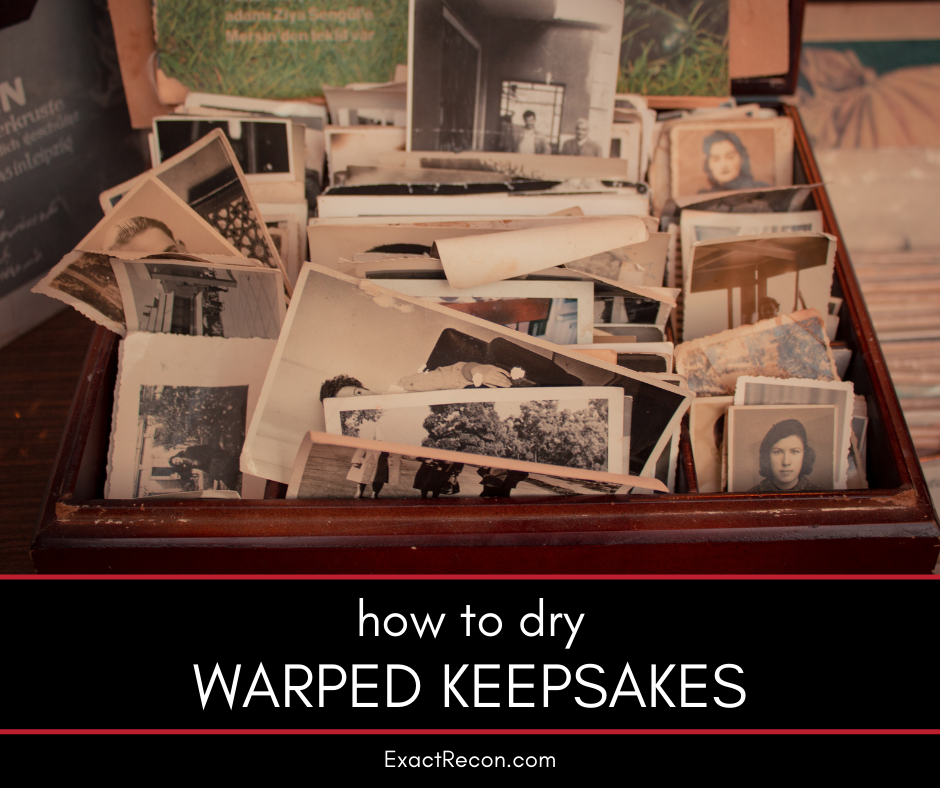
When a flood damages your home, it often affects the things you care about most. Photos, books, letters, and heirlooms can absorb water quickly and warp. While not everything can be saved, you can take steps to reduce damage and sometimes restore your keepsakes.
How to Dry Warped Keepsakes after a Flood
Floods can cause water damage that affects not only your home’s structure but also your personal belongings. Keepsakes like photos, letters, and heirlooms hold deep personal value, and it can be stressful to see them soaked. Acting quickly gives you the best chance of saving them. This guide explains the following:
-
Preparing to handle water damaged keepsakes
-
Steps to dry photos and documents
-
How to treat books and albums
-
Special care for textiles and fabrics
-
When to call for professional restoration
Here’s a closer look at each.
Preparing to Handle Water Damaged Keepsakes
Before touching anything, make sure your home is safe to enter. Standing water can hide risks like electricity or contamination. FEMA shares safety tips on reentering flooded homes, which you can read here from their official site.
Wash and dry your hands before handling delicate items. Use clean containers or plastic bins to separate items by type. Keep things out of direct sunlight until you’re ready to dry them, because strong light and heat can cause more warping.
Steps to Dry Photos and Documents
Remove photos and papers from frames or albums if you can. Place them face up on clean paper towels or unprinted newsprint. Don’t rub them. Instead, let air do the work. Change the paper often to absorb moisture.
If items are stuck together, don’t pull them apart. Place them in a freezer-safe bag and freeze them. Later, experts can use controlled drying methods to separate and restore them.
How to Treat Books and Albums
Hold wet books carefully to avoid tearing. Stand them upright on absorbent paper with pages slightly fanned out. Turn them gently every hour or so to keep pages from sticking.
If a book is too fragile or rare, call for mold remediation services before mold has a chance to grow. Mold can start forming in less than 48 hours, and once it spreads it’s harder to save paper materials.
Special Care for Textiles and Fabrics
Clothing, quilts, and soft textiles can hold water that causes both odor and mold growth. Rinse fabrics with clean water if you can. Then spread them on clean towels or hang them to air dry indoors.
Avoid using heat dryers on delicate textiles. High heat can shrink or warp fabrics. If smoke or fire damage is also involved, smoke residue may need special cleaning to avoid permanent stains.
When to Call for Professional Restoration
Sometimes the damage is too great to handle on your own. If your keepsakes are heavily soaked, stuck together, or already growing mold, you’ll need help. Restoration teams can provide freeze drying, chemical cleaning, or specialized equipment to salvage belongings.
They also handle larger home problems at the same time, including smoke damage, reconstruction, storm damage, and full disaster cleanup. Calling early makes recovery easier and gives your belongings the best chance.
FAQ About Drying Warped Keepsakes after a Flood
Check out these commonly asked questions about drying warped keepsakes after a flood. If you don’t see your question here, please call our office and we’ll find you the answers you need.
What Should I Do First after a Flood Damages My Keepsakes
First, make sure your home is safe to enter. Wear gloves if items have been in dirty water. Then start sorting keepsakes by type and follow safe drying steps.
Can I Use a Hair Dryer or Heater to Dry My Keepsakes
Avoid using direct heat. Hair dryers and heaters can warp or shrink items even more. Use air drying with fans or clean towels to remove moisture instead.
How Long before Mold Starts Growing on Wet Keepsakes
Mold can start growing within 24 to 48 hours. This is why it’s important to act quickly and consider professional mold remediation if you can’t dry everything fast enough.
Can Freezing Really Save Wet Photos and Papers
Yes. Freezing stops mold growth and prevents further damage. Later, professionals can use drying equipment to separate stuck pages or photos without tearing them.
When Should I Call a Professional Restoration Company
Call as soon as you see heavy damage, strong odors, or signs of mold. Professionals have the right tools to save belongings and prevent bigger issues in your home.
Final Thoughts
Drying warped keepsakes after a flood takes patience and care. While you can often save photos, books, and fabrics by air drying and freezing, some items need professional help. Calling a restoration team early protects your belongings and helps your home recover faster.
Do You Need a Disaster Remediation Expert in Washtenaw County or Jackson County?
If your home has already been damaged, we can help. Check out our services and get a free disaster remediation quote today. We offer: